What I've Learned About B12 After 14 Years in Vitamin Therapy
I spent 22 years as a paramedic firefighter before opening Recovery Room IV Therapy & Wellness in Scottsdale. During that time, I watched people struggle with fatigue, brain fog, and mysterious symptoms that doctors couldn't quite pin down. More often than you'd think, the answer was simple: Vitamin
I spent 22 years as a paramedic firefighter before opening Recovery Room IV Therapy & Wellness in Scottsdale. During that time, I watched people struggle with fatigue, brain fog, and mysterious symptoms that doctors couldn’t quite pin down.
More often than you’d think, the answer was simple: Vitamin B12 deficiency.
The problem is that B12 deficiency doesn’t announce itself with obvious symptoms. It creeps in slowly, masquerading as stress, aging, or just being tired. By the time people realize something’s wrong, the damage has already started.
Here’s what I’ve learned about B12 that most people don’t know.
The Energy Crisis Nobody Talks About
When your B12 levels drop, your body enters what I call an energy crisis.
You can’t produce enough healthy red blood cells to carry oxygen throughout your body. You feel exhausted even after a full night’s sleep. Your brain feels foggy. Your muscles feel weak.
The most common symptom people describe to me is fatigue and sluggishness. But it goes deeper than that.
Peripheral neuropathy is the most common neurological presentation of B12 deficiency. You might experience pain, numbness, tingling, loss of sensation, or decreased motor activity.
The good news? Early diagnosis and treatment can lead to full or partial recovery.
Most people notice improved energy within a few weeks of treatment. It typically takes several months for numbness to decrease and coordination to improve, but the recovery happens.
Why Your Diet Might Not Be Enough
B12 is found mostly in animal products: fish, meat, poultry, eggs, milk, and dairy products.
Beef liver provides an astounding 70.7 micrograms in a 3-ounce serving. That’s 2,944% of the recommended daily allowance. Clams are another powerhouse source, with 3 ounces providing 17 micrograms or 708% of daily needs.
But here’s the catch: eating B12-rich foods doesn’t guarantee your body absorbs it.
Plant foods have no vitamin B12 unless they’re fortified. If you follow a vegetarian or vegan diet, you’re at higher risk. But even meat-eaters can develop deficiency.
Age reduces your stomach’s ability to absorb B12 from food. Certain medications like metformin and proton pump inhibitors (omeprazole) interfere with absorption. Gastrointestinal issues create barriers.
In some populations, B12 deficiency affects 47% of people.
That’s nearly half.
The Absorption Problem With Oral Supplements
Most people reach for oral B12 supplements when they hear they’re deficient.
It makes sense. Supplements are easy, inexpensive, and available everywhere.
But here’s what happens when you take an oral supplement:
The vitamin travels through your digestive system. Your stomach acid breaks it down. Your intestines attempt to absorb it. Most of it gets eliminated before reaching your bloodstream.
Oral supplements typically result in less than 10% absorption by the body.
That’s not a typo. Less than 10%.
Nutrient injections and IV drips, on the other hand, allow the body to absorb and utilize 100% of vitamins, minerals, and amino acids.
The difference is dramatic because nutrients in IV drips enter the bloodstream directly. They’re utilized by your body’s cells right away.
A 2022 study comparing weekly intravenous versus daily oral B12 supplementation found that both methods normalized vitamin B12 levels. But weekly IV supplementation showed a statistically significant increase with a mean change of 1,100 ± 535 picogram/ml compared to 713 ± 372 picogram/ml for oral supplementation.
Most people feel results almost instantly.
Understanding Different Forms of B12
Not all B12 is created equal.
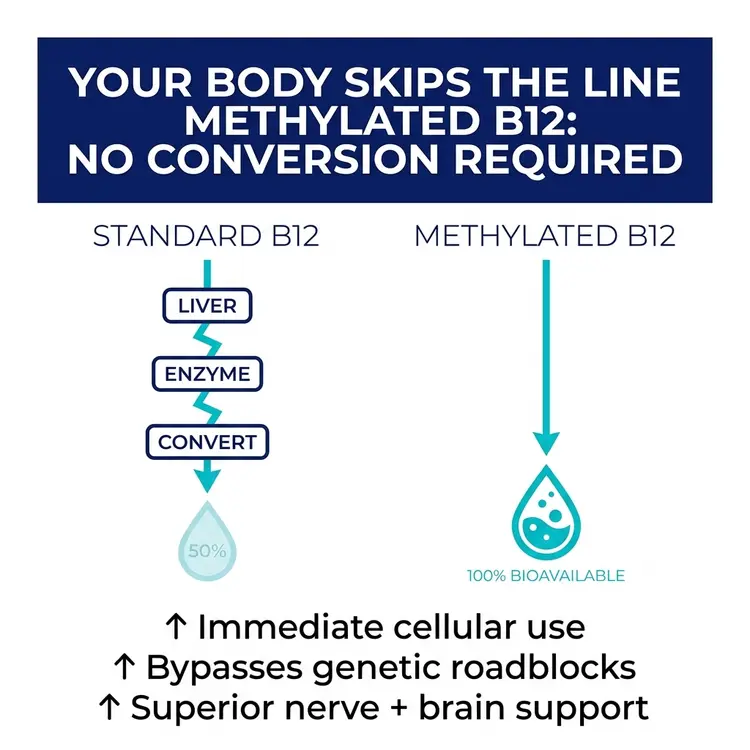
You’ll see different forms listed on supplement labels: methylcobalamin, cyanocobalamin, hydroxocobalamin, and adenosylcobalamin.
People often ask me which form is “best.” The truth is more nuanced.
Cyanocobalamin is the most common form in supplements. Your body absorbs it well. A 2021 study found that cyanocobalamin actually gave better results in maintaining B12 levels (median=150 pcg/l) compared with methylcobalamin (median=78.5 pcg/l) in plant-based diet adults.
Methylcobalamin has a higher retention rate and remains in the body for longer periods at higher levels. It’s one of the forms your body uses as a cofactor.
Hydroxocobalamin is naturally produced by bacteria. It’s converted into methylcobalamin and adenosylcobalamin in your body. It’s retained longer than other forms and can be administered at intervals of up to three months.
At Recovery Room IV Therapy & Wellness, we use different forms depending on your specific needs and health goals. There’s no one-size-fits-all answer.
The Anti-Aging Benefits Nobody Mentions
Most people think of B12 as the “energy vitamin.”
They’re not wrong. But B12 does something else that matters to our clients in Scottsdale who are focused on wellness and anti-aging.
B12 aids in the production of DNA and RNA, which are essential for cell regeneration. Your skin renews itself for a fresher, more youthful complexion.
It supports collagen synthesis, helping to maintain your skin’s suppleness and reduce the appearance of fine lines and wrinkles.
B12 possesses anti-inflammatory properties that can help alleviate skin conditions like acne, eczema, and redness. It can be applied topically to reduce inflammation, dryness, and acne.
For hair health, B12 is necessary for cell production. It supports red blood cell production, ensuring oxygen and nutrients reach hair follicles.
B12 deficiency can lead to:
- Brittle hair prone to breakage
- Hair thinning
- Premature graying
- Reduced keratin production (the structural foundation of hair)
By maintaining optimal B12 levels, you can enjoy stronger hair, improved volume and strength, and support for overall hair health.
How Long Does Deficiency Take to Develop?
B12 is highly conserved through the enterohepatic circulation.
That means your body recycles it efficiently. You need around 2.4 micrograms daily, but your body holds onto what it has.
Deficiency from malabsorption can develop after 2-5 years. Deficiency from dietary inadequacy in vegetarians develops after 10-20 years.
This slow timeline is why people often don’t realize they’re deficient until symptoms become severe.
The good news is that about 1% of free cobalamin is absorbed passively in the terminal ileum. That’s why high-dose oral vitamin B12 (1,000 µg daily) or IV therapy can be effective alternatives for people with absorption issues.
What I Tell People About B12 Therapy
At Recovery Room IV Therapy & Wellness, we don’t claim to cure anything.
That’s not our goal, and it wouldn’t be ethical or professional to suggest otherwise.
Our goal is to help you achieve optimal wellness. To feel better. To have more energy. To support your body’s natural functions.
B12 therapy is one tool in a comprehensive approach to wellness. It works best when combined with proper nutrition, adequate sleep, stress management, and other wellness modalities.
I’ve seen people come into our Scottsdale location exhausted, frustrated, and desperate for answers. After B12 therapy, they report feeling like themselves again.
That’s what drives us.
Who Should Consider B12 Therapy
You might benefit from B12 therapy if you:
- Follow a vegetarian or vegan diet
- Are over 50 years old
- Take metformin or proton pump inhibitors
- Have gastrointestinal issues
- Experience unexplained fatigue or brain fog
- Have numbness or tingling in hands or feet
- Want to support anti-aging and skin health
- Struggle with hair thinning or brittle nails
But here’s what’s important: consult with a medical professional before starting any supplementation.
At Recovery Room, we have experienced staff who can assess your needs, review your health history, and recommend appropriate treatment. Our team includes Dr. Francis Martinez (DO Physician), Dr. Ann Sura, Paula Raney, and myself.
We believe in doing things ethically and operating with the highest level of professionalism and skill.
The Bottom Line on B12
After 14 years in vitamin therapy, I’ve learned that B12 deficiency is more common and more serious than most people realize.
It affects your energy, your brain, your nerves, your skin, and your hair. It develops slowly, which makes it easy to miss. And oral supplements often don’t provide adequate absorption.
IV therapy offers a solution that delivers 100% absorption and faster results.
But more than anything, I’ve learned that optimal wellness requires attention to detail. It requires professional guidance. It requires a commitment to doing things right.
That’s what we provide at Recovery Room IV Therapy & Wellness in Scottsdale.
We’re here to help you feel optimal. To support your wellness journey. To provide the expertise and care you deserve.
Because living a fuller, more productive life starts with the fundamentals. And B12 is one of those fundamentals that makes everything else possible.