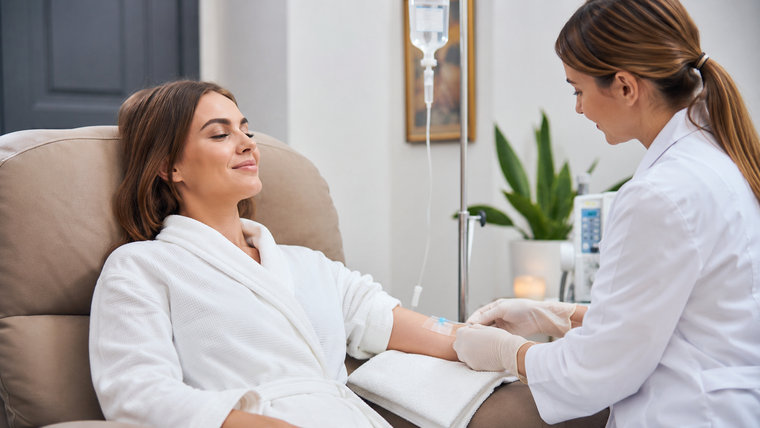
Why Your Hangovers Got Worse After 30 and What Science Says About IV Recovery
I've administered over 68 IVs in a single six-hour shift. I've watched thousands of people recover from hangovers over 14 years. And the question I hear most often from anyone over 30 is always the same: "I used to be fine the next day. What happened?" The answer isn't about willpower or tolerance.

I’ve administered over 68 IVs in a single six-hour shift. I’ve watched thousands of people recover from hangovers over 14 years. And the question I hear most often from anyone over 30 is always the same:
“I used to be fine the next day. What happened?”
The answer isn’t about willpower or tolerance. It’s about biology.
Your body changed. And once you understand what’s happening at the cellular level, the difference between a 25-year-old bouncing back in 45 minutes and a 35-year-old needing hours to feel functional starts to make perfect sense.
The Enzyme Decline You Can’t See (But Definitely Feel)
Your liver produces two critical enzymes that break down alcohol: alcohol dehydrogenase and aldehyde dehydrogenase.
Here’s how they work together.
Alcohol dehydrogenase converts ethanol into acetaldehyde. Then aldehyde dehydrogenase converts that toxic acetaldehyde into acetate, which your body can eliminate safely.
After 30, the production and efficiency of these enzymes decline. Research shows that ADH activity decreases by up to 20% in individuals over 65, and the decline starts much earlier than most people realize.
It’s not a dramatic drop-off. But it’s enough that your liver processes alcohol maybe 20-30% slower than it did in your mid-20s.
That means acetaldehyde lingers in your system longer.
And acetaldehyde is significantly more toxic than alcohol itself. It’s responsible for the headache, nausea, and fatigue that define a brutal hangover. Studies confirm that acetaldehyde toxicity causes rapid pulse, sweating, skin flushing, nausea, and vomiting at higher concentrations.
You’re dealing with that toxic intermediate for more hours. That’s why everything feels more severe.
The Physical Markers I See Every Day
When a 25-year-old comes in with a hangover, I can pinch the skin on the back of their hand and it snaps right back. That’s normal skin turgor, a clinical indicator of fluid volume status.
In someone over 30 who’s dehydrated from alcohol, that skin stays tented for a second or two longer.
But skin turgor is just one marker.
I’m also looking at mucous membranes. Dry lips, dry mouth, sometimes sunken eyes. The older patients often complain of more severe headaches, which tells me there’s more significant brain dehydration happening. Their blood pressure readings can be lower, heart rate slightly elevated. Classic signs of volume depletion.
And here’s what I’ve noticed over thousands of treatments: the older patients almost always report they couldn’t keep water down that morning.
They tried to drink water, but it just sat in their stomach making them feel worse.
Why You Can’t Just “Drink More Water”
Alcohol is directly toxic to your stomach lining. It causes gastritis, inflammation of the gastric mucosa.
When you drink heavily, especially as you get older and your stomach lining is less resilient, that inflammation becomes more severe.
So when you wake up and try to chug water, your stomach is already irritated and inflamed. The water just sits there because your stomach’s motility is impaired. It’s not moving things through your digestive tract efficiently.
Plus, alcohol delays gastric emptying. That water pools in your stomach, creating more nausea and sometimes triggering vomiting.
Even if you manage to keep it down, the small intestine—where most water absorption happens—is also inflamed and not functioning optimally.
The intestinal villi, those tiny finger-like projections that absorb nutrients and fluids, are damaged from alcohol exposure. The absorption rate is dramatically reduced.
You might drink 16 ounces of water, but your body’s only absorbing a fraction of it. And it’s happening slowly over hours instead of efficiently.
Meanwhile, you’re still dehydrated at the cellular level. Your brain is still depleted. And you feel terrible.
Research shows that oral hydration achieves only 20-30% absorption, while IV therapy delivers 100% bioavailability.
The Dehydration Cascade That Makes Everything Worse
Alcohol suppresses the release of vasopressin, also called antidiuretic hormone.
Vasopressin usually signals your kidneys to retain water. Without it, your body flushes out fluids faster. Studies confirm that drinks containing more than 4% alcohol significantly suppress ADH levels and increase urine volume.
You’re not just losing water. You’re losing electrolytes. Sodium, potassium, magnesium—all critical for cellular function, nerve signaling, and muscle contraction.
By the time someone comes in with a hangover, their entire system is compromised. It’s not just one thing. It’s a cascade of issues that makes the dehydration more profound and harder to reverse.
The younger patients might feel nauseous, but they can usually still get some fluids down. With the 35-plus crowd, their entire system seems more compromised.
What IV Therapy Actually Does (And Doesn’t Do)
I need to be clear about something. We’re not claiming to cure anything.
What IV therapy does is support your body’s natural ability to process and eliminate toxins.
We’re bypassing that entire compromised GI system and delivering fluids, electrolytes, and vitamins directly into your bloodstream where they’re immediately bioavailable.
Within minutes, those fluids are circulating, rehydrating tissues, and supporting your body’s natural detox processes.
We’re providing hydration, which helps your kidneys flush out metabolites more efficiently. We’re giving B vitamins—particularly B1, B6, and B12—which are cofactors in metabolic processes. They help enzymes function better.
We include vitamin C and glutathione, which support your liver’s natural antioxidant systems and help neutralize free radicals produced during alcohol metabolism.
We’re not speeding up enzyme production or magically detoxifying your liver. We’re giving your body the tools it needs to do what it’s already trying to do, just more efficiently.
It’s like the difference between trying to clean your house with no supplies versus having the right cleaning products. The work still has to be done, but you’re better equipped to do it.
The Minute-by-Minute Recovery I Watch Happen
It’s fascinating to watch because you can see the changes happen in real time.
In the first 5-10 minutes, patients usually report that their headache starts to ease. Not gone, but the pressure reduces. That’s the fluids beginning to rehydrate the brain tissue and the meninges, those membranes around the brain that get irritated when you’re dehydrated.
Around the 15-minute mark, I’ll notice their color starting to improve. That gray, washed-out look begins to fade and they get some color back in their face. Their eyes look less sunken, more alert.
By 20-25 minutes, most patients say the nausea is significantly better or completely gone. That’s when they’ll often ask for water or say they feel like they could actually eat something, which tells me their GI system is calming down.
The full IV usually takes 30-45 minutes to complete. By the end, you can see the difference in their skin hydration. It looks plumper, healthier. Their energy level shifts noticeably. They’ll sit up straighter, start talking more, sometimes even joke around.
But here’s the thing.
The older patients—the 35-and-up crowd—they feel better during the IV, but it takes another hour or two after we’re done for them to feel truly functional.
The younger ones walk out ready to conquer the world. The older ones walk out feeling human again, but they still need rest.
It’s like we’ve given their body the resources to recover, but the actual recovery process still takes time because their systems just don’t bounce back as fast.
Why Glutathione Changed Everything
Glutathione is one of the most powerful antioxidants your body produces naturally. It’s critical for liver function and detoxification.
Your liver uses glutathione to neutralize toxins and free radicals. It’s like your liver’s primary defense system.
When you drink alcohol, your glutathione levels get depleted rapidly because your liver is working overtime to process all those toxins. Research shows that the liver’s stores of glutathione quickly run out when larger amounts of alcohol enter the system, causing acetaldehyde to build up.
By the time someone comes in with a hangover, their glutathione stores are basically exhausted.
I started including it in IVs about eight years into my practice after reading research on oxidative stress and alcohol metabolism.
What I’ve observed is that patients who get glutathione in their IV report feeling clearer mentally. Less brain fog, better focus.
It’s not just about physical symptoms improving. There’s a cognitive component.
They’ll say things like “I feel like I can think again” or “the cloudiness is lifting.”
I think what’s happening is the glutathione is helping neutralize the oxidative damage in the brain caused by alcohol and acetaldehyde.
The other components—fluids, electrolytes, B vitamins—they’re addressing dehydration and supporting metabolism. But glutathione is specifically targeting that toxic load at the cellular level.
It’s especially noticeable in the older patients who come in really depleted. When we add glutathione, their recovery seems more complete. Not just symptomatic relief but actual cellular support.
It’s become one of my non-negotiables in a hangover IV because the difference is that significant.
When IV Therapy Doesn’t Work as Expected
We usually have a high success rate. But there are cases where recovery takes longer or doesn’t feel as complete.
Usually it’s someone who has mixed many different types of liquor or consumed high sugar content drinks.
When you mix different alcohols, you’re introducing different congeners—chemical compounds produced during fermentation that contribute to hangover severity. Your liver has to process multiple types of toxins simultaneously, which slows everything down.
High sugar content creates its own problems. You’re dealing with blood sugar crashes on top of dehydration and toxin processing.
IV therapy can still help in these cases, but the recovery timeline is longer. And I’m always honest about that with patients.
We’re not performing miracles. We’re supporting your body’s natural healing processes. If you’ve overwhelmed your system with multiple stressors, it’s going to take longer to recover.
What You Can Actually Control
The best hangover is the one you prevent.
If you’re over 30 and you’re going to drink, here’s what I’ve learned from 14 years of watching people recover:
Hydrate before, during, and after. Yes, your GI system might not absorb it efficiently the next morning, but getting ahead of dehydration helps.
Stick to one type of alcohol. Don’t mix liquors. Your liver will thank you.
Avoid high-sugar drinks. The blood sugar crash compounds everything.
Eat before drinking. Food slows alcohol absorption and protects your stomach lining.
Know when to seek support. If you wake up severely dehydrated, unable to keep fluids down, with a pounding headache—that’s when IV therapy makes the most sense. You’re bypassing a compromised system and giving your body what it needs immediately.
Your body changed after 30. That’s not weakness. That’s biology.
Understanding what’s happening gives you better options for dealing with it.
And sometimes the best option is giving your body the resources it needs to do what it’s already trying to do—just faster and more efficiently.