The 3AM Wake-Up Protocol: Why Magnesium Threonate and Apigenin Work When Melatonin Fails
You crash hard at 10pm. Sleep feels deep. Then 2:47am hits. Your eyes open. Your mind starts racing. You're wide awake with that familiar cortisol spike coursing through your system. Sound familiar? At Recovery Room IV Therapy & Wellness, we've seen this pattern consistently over the past year. The
You crash hard at 10pm. Sleep feels deep.
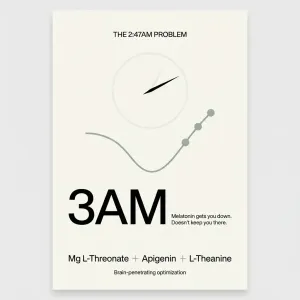
Then 2:47am hits. Your eyes open. Your mind starts racing. You’re wide awake with that familiar cortisol spike coursing through your system.
Sound familiar?
At Recovery Room IV Therapy & Wellness, we’ve seen this pattern consistently over the past year. The 3am wake-up has become the most common sleep complaint we hear. And what’s interesting is that most people who walk through our doors have already tried the usual suspects: melatonin, magnesium citrate, CBD, sleep aids, even marijuana.
Nothing keeps them asleep past 3am.
Why Melatonin Knocks You Out But Doesn’t Keep You Down
Here’s what patients tell us about melatonin: “It immediately knocks me out, but I don’t stay asleep.”
That’s because melatonin is a sedative, not a sleep optimizer. It signals your body that it’s time to sleep, which helps you fall asleep faster. But it doesn’t address the underlying neurochemical imbalances that wake you up at 3am.
Think of melatonin as a light switch. It turns the lights off, but it doesn’t fix the wiring.
When your cortisol spikes in the middle of the night and your nervous system activates, melatonin has already done its job. You’re on your own. Your mind races. You check your phone. You start thinking about tomorrow’s meetings or yesterday’s conversations.
You need something different.
The Brain-Penetrating Difference: Why Magnesium Form Matters
Most people grab magnesium citrate or oxide off the shelf because it’s cheap. But here’s the problem: citrate and oxide aren’t very bioavailable. They don’t get into your system effectively, and they definitely don’t reach your brain where sleep regulation happens.
Magnesium L-threonate changes the game.
Identified in 2010, magnesium L-threonate was specifically developed to cross the blood-brain barrier. Unlike other forms, it actually raises magnesium levels in your brain and neurons, where it can directly influence sleep regulation and nervous system function.
This matters because your brain needs magnesium to calm down. It enhances GABA activity, the neurotransmitter that tells your nervous system to relax. It increases the density of synapses in your brain. It creates the neurochemical environment your body needs to maintain deep sleep through the night.
A recent 6-week clinical trial in Australia found something remarkable: magnesium L-threonate supplementation reduced brain cognitive age by 7.5 years in healthy adults. The study also reported improvements in memory, reaction time, and self-reported sleep measures.
The effective dose? 108-144mg of elemental magnesium per day. That’s below the RDA of 350-420mg, meaning you can safely supplement even when combined with dietary intake.
Why We Also Use Magnesium Bisglycinate
Magnesium bisglycinate is the other form we recommend. It’s highly bioavailable and gentle on your digestive system. While it doesn’t cross the blood-brain barrier as effectively as threonate, it calms your nervous system through a different pathway.
Both work. Both are light-years ahead of citrate or oxide.
The Apigenin Advantage: More Than Just Chamomile Tea
When patients tell us they drink chamomile tea for sleep, we explain the dose and consistency difference.
Chamomile contains apigenin, the compound that actually produces the calming effect. But the amount in tea is small and variable. You’re getting a gentle signal, not a therapeutic dose.
Apigenin binds to benzodiazepine receptors in your brain, the same receptor complex targeted by common anti-anxiety and sleep medications. But here’s what makes it different: apigenin doesn’t cause strong sedation, dependence, or withdrawal symptoms.
The research is compelling. Apigenin increases NAD+ levels by inhibiting the NAD+-consuming glycoprotein CD38. In animal models, it positively impacts both sleep and longevity through multiple pathways, including GABA modulation and inflammatory reduction.
Dietary apigenin intake correlates with better sleep quality in large adult cohorts. Studies typically use 50-100mg per day for sleep improvement. At these doses, apigenin is considered safe with no toxicity reported.
The Synergistic Protocol: How These Compounds Work Together
Here’s the protocol we recommend at Recovery Room:
Magnesium Threonate or Bisglycinate: 140-200mg of elemental magnesium
Apigenin: 50mg
L-Theanine: 100-400mg
Take this combination 30-60 minutes before bed.
The synergy matters. Magnesium threonate crosses the blood-brain barrier and enhances GABA activity. Apigenin interacts with GABA receptors to support stress relief. L-theanine smooths out racing thoughts without causing drowsiness.
Together, they create an optimal neurochemical environment for sleep. They address multiple aspects of sleep disturbances: the time it takes to fall asleep, the ability to maintain sleep through the night, and the quality of deep and REM sleep stages.
What to Expect in Your First Week
This protocol doesn’t work for every single person. Sometimes you’re dealing with hormone imbalances that need to be addressed separately. We see this most often in men and women in their early to late 40s experiencing menopause or andropause.
But for most people, the results show up within the first week.
A randomized controlled trial found that adults taking 1g/day of magnesium L-threonate for 21 days showed significant improvements in sleep quality, especially deep and REM sleep stages. They also reported improved mood, energy, alertness, and daily productivity.
The improvements in behavior upon awakening included better alertness, coordination, and balance. Patients described being “less grouchy,” “in a better mood,” and “more mentally alert” when they woke up.
Many of our patients report getting into deep sleep and sleeping well through the night. The 3am wake-ups stop. The cortisol spike that used to jolt them awake doesn’t happen. They wake up naturally, feeling rested.
The First Three Nights
Don’t expect miracles on night one. Your nervous system needs time to adjust.
Some people notice a difference immediately. Others take 3-5 days to feel the full effect. By the end of week one, you should have a clear sense of whether this protocol works for your body.
If you’re still experiencing 3am wake-ups after two weeks, it’s time to look deeper. Hormone panels, cortisol testing, and other wellness labs can identify what else might be going on.
Why This Approach Differs From Everything Else You’ve Tried
The supplements you’ve tried before were sedatives. They forced your body into sleep without addressing the underlying nervous system dysregulation.
This protocol optimizes your brain chemistry for natural sleep. It supports the systems that regulate sleep-wake cycles. It calms the nervous system without knocking you out.
The difference shows up in how you feel when you wake up. You’re not groggy. You’re not foggy. You’re alert, energized, and ready to move.
That’s what optimization looks like.
The Professional Implementation
At Recovery Room IV Therapy & Wellness in Scottsdale, we’ve spent years refining this protocol based on peer-reviewed research and real patient outcomes. Our background in emergency medicine and high-risk obstetrics gives us a unique perspective on how the body responds to stress and sleep deprivation.
We don’t claim to cure anything. Our goal is to help you feel optimal, to support your body’s natural healing processes, and to give you the tools you need for better sleep and wellness.
If you’re experiencing the 3am wake-up pattern, if melatonin has stopped working, if you’re tired of feeling exhausted, this protocol might be what you need.
Start with the basics: magnesium threonate or bisglycinate (140-200mg), apigenin (50mg), and L-theanine (100-400mg). Take it consistently for two weeks. Track how you feel.
Your sleep matters. Your energy matters. Your ability to live a fuller, more productive life matters.
That’s what we’re here to support.